


What is Casting?
Casting is the method of solidifying molten metal by pouring it into a mold with a cavity of the desired shape.
The casting industry is the sector that produces steel, pig iron, ductile iron and temper casting products in raw or processed form by melting steel scrap, various pig iron and iron alloys at high temperatures in cupolas, arc and induction furnaces and shaping them in metal, sand or ceramic molds.
Casting is the process carried out to create any shape intended to be obtained in a specified form. The casting process is completed by heating and melting the raw-liquid material (alloy, metal-containing) to be used in casting and pouring it into molds of a predetermined shape in a fluid (semi-liquid) state. In other words, casting is the solidification of molten liquid metal by pouring it into a mold or cavity and taking its shape.
The casting process is carried out by filling liquid metal into molds containing a cavity shaped like the part to be produced. The mold cavities are larger than the part desired to be obtained. Thanks to this size, the decrease in size differences between solidification and cooling is balanced.
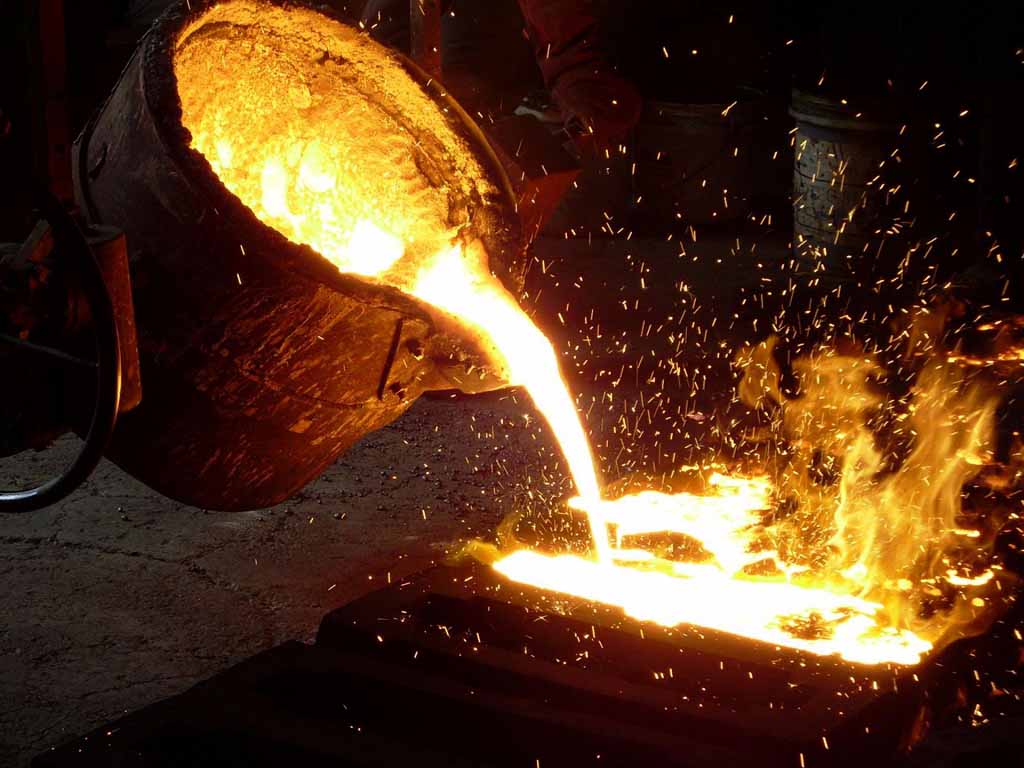
It is known that the mold used during the casting process can be open or closed. Closed molds, which are more commonly used in casting technology, have a runner system to fill the mold with liquid metal. Molds used in casting production can be produced by different refractory materials.
These materials; They can be counted as sand, plaster, ceramic and metal. In some casting methods, after solidification, the mold must be destroyed in order to remove the part. Sand molds can be used once. In some methods, patterns appear to be permanent. Metal and gravity molds are used to produce multiple parts.Casting methods of various materials such as cast iron, steel, aluminum, magnesium and titanium differ from each other. Although the production of light metals such as aluminum and magnesium varies depending on the shape and characteristics of the part to be produced, it is generally produced by the pressure casting method, which is a type of permanent mold casting.
Casting Types
Casting types can generally be examined under two headings. These can be called perishable mold casting and permanent mold casting.Casting types are divided into different headings in some sources according to the molds used in the casting process; These are classified as sand mold casting and other casting methods.
Casting types consist of six items. These;
investment casting,
continuous casting,
Centrifugal/centrifugal casting,
gravity casting,
die casting
It is listed as plaster casting.
In investment casting; Complex parts can be obtained cleanly and completely. This casting form is defined as the closest casting form to the final form of the part in the metal part manufacturing industry. In investment casting, alloys can be used if it is not possible to process or forge them by removing chips. Investment casting is used in the production of special products.
The process of turning the molten metal into a solid by passing it through a mold with two open ends as a result of cooling with water is called continuous casting. In this method, a permanent mold is used. This pattern is open at both ends. Liquid metal is poured into the permanent mold and cooling liquid is sprayed as it passes through the mold. In this way, a decrease in temperature is achieved. As the metal solidifies, the product conforming to the desired shape comes out from the other side of the mold. It is not possible to cast mixed parts in the continuous casting method. In the continuous casting method, mostly sheet metal, strip, plate type and solid cylindrical products are cast.
Plaster casting is preferred in the casting of light alloys. The casting method in which steel or cast iron is used as mold material is called gravity casting. In gravity casting, many parts can be cast with metal molds. If a small number of parts are produced in gravity casting, this casting can be expensive. It is understood from this that the initial investment cost of gravity die casting is high. In this method, it is seen that some parts are impossible to cast because it is difficult to remove the casting from the mold.
Casting is a way of shaping metals. Metal alloys used in the casting industry can be examined in three groups when evaluated from chemical and physical aspects. These groups are iron casting, non-ferrous casting and steel casting. There are various casting classes within these groups. Casting methods are divided into two: casting methods using spent molds and casting methods using permanent molds. Casting methods using perishable moulds; sand mold casting, ceramic mold casting, plaster mold casting, shell mold casting, closed mold casting, vacuum mold casting and precision mold casting. Casting methods using permanent molds are metal (permanent) mold casting, centrifugal casting, pressure casting and continuous casting. Casting processes vary in casting methods using permanent molds, but casting processes are almost the same in casting methods using perishable molds. The most commonly used casting method, which has a large share in production, is sand mold casting.